
Inverting The Primary Triads
The signs for altering the inversions of the Primary Triads provide a natural expansion of the nine-fold initial framework for chord positions. Inversion is signalled by the right hand in a distinctive gesture that is solely employed for this purpose: the palm turned upwards facing the left-hand’s downwards-facing position. Starting in this position for chord I, the impression given is a little like holding with great care a small cage containing a delicate animal like a hamster or gerbil. This is deliberate, because it establishes the interdependence of the hands in achieving inversion. The critical feature is the right hand being held palm-upwards, whatever the origin of the chord inverted in relation to this.


Creating this sign readies participants for the chord to be inverted, either up or down, as follows (see Videos 11 and 12):
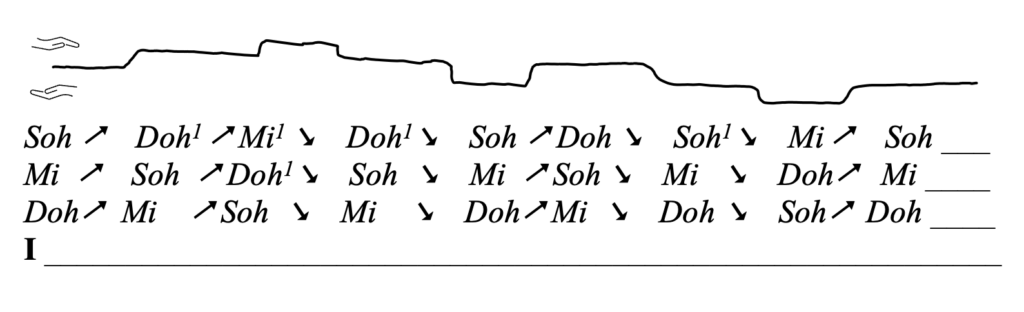
Developing participants’ response to these processes is essential if they are securely to discriminate between {same chord, different inversion} and {different chord}. A highly productive exercise to achieve this is provided by exploration of available arpeggiation that can be invoked by the ‘Quixote’ sign (see The ‘infinity spiral’ gesture).
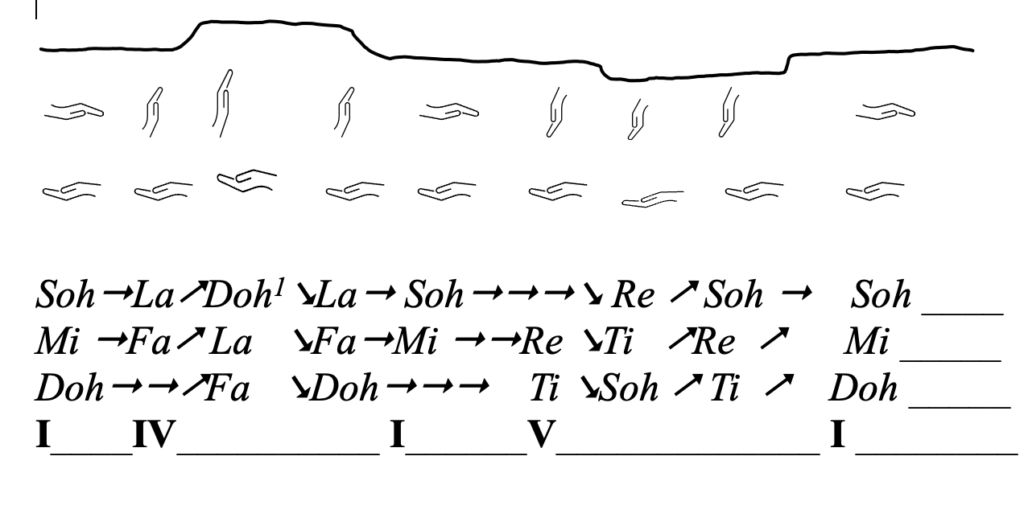
This gestures for inversion can also be employed in relation to other chords, though it is impossible to preserve the opposed-hands relationship available to chord I. Nevertheless, the critical features is that the right hand is always presented palm-upwards, and it is this that controls the requirement and direction for inversion. With this in mind, the following can be attempted:
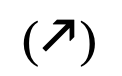
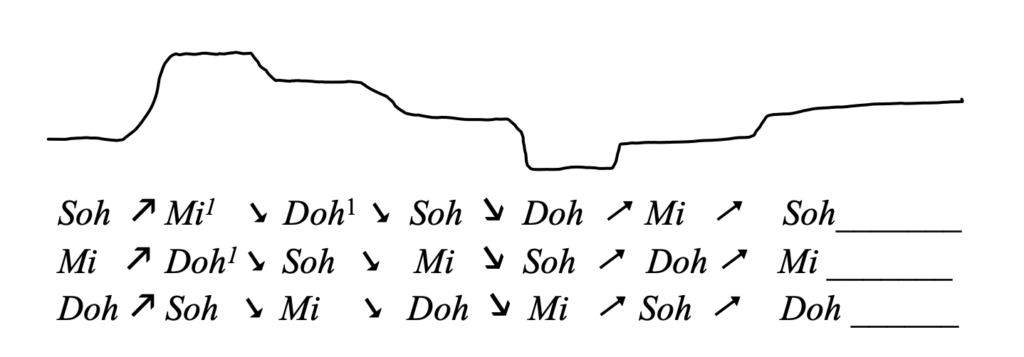
Once participants are able to recognise their voice-leading roles in responding to inverting a chord to its immediately proximate version (i.e. moving upwards from root position to first inversion, or downwards from root position to second inversion), a variant of the gesture that ‘sweeps’ through a greater arc signs that the proximate inversion is omitted. This permits movement from, for instance, root position directly upwards to second inversion, or directly downwards to the lower first inversion. These moves are capture in the following examples, employing a larger arrow (see below) pointing either upwards or downwards to designate this greater range:
Once the process of inverting has been practised and become fluent, it can be applied to minor and secondary triads as well. The relationship between the left-hand chord gesture and the right-hand responsibility for signalling the direction and proportion of inversion remains as described for the Primary Triads.